

Sebastian Cabot's Expedition to the Río de la Plata
In this entry · 16 sections
Expedition · 1526. Sebastián Caboto.
The municipal account places departure from Sanlúcar on 3 April 1526, with four vessels and 210 people. González Ochoa describes Seville in April and three vessels: each reconstruction retains its own figures. [B201] [B211]
Reports of inland riches transmitted in Brazil by Melchor Ramírez preceded the diversion to the Plata and Paraná, according to González Ochoa. [B201]
González Ochoa dates the Sancti Spiritu fort to 9 June 1527 and return to Spain to 1530. [B201]
Context
González Ochoa relates the 1525 commission to relief of Magellan’s men and competition with Portugal. [B201]
Stages
- April 3, 1526, Sanlúcar de Barrameda: The municipal account dates departure from Sanlúcar to 3 April 1526. [B211]
Development
Reports of inland riches transmitted in Brazil by Melchor Ramírez preceded the diversion to the Plata and Paraná, according to González Ochoa. [B201]
Events of this expedition
Route data
- 4 ships in the original fleet, bound for the Moluccas.
- News of a “silver mountain range” diverted the fleet toward the interior.
- Cabot was tried and banished on his return, although he later recovered the post of chief pilot.
Outcome
González Ochoa dates the Sancti Spiritu fort to 9 June 1527 and return to Spain to 1530. [B201]
Limits of the evidence
The arrival at the Río de la Plata in 1527 is not to be confused with the Spanish departure of 1526. [B201] [B201]
Expedition facts
| Date | 1526 |
|---|---|
| Leader | Sebastián Caboto |
| Departure | Sanlúcar de Barrameda |
| Destination | River Plate |
| Period | April 3, 1526 |
Organisation
The municipal account places departure from Sanlúcar on 3 April 1526, with four vessels and 210 people. González Ochoa describes Seville in April and three vessels: each reconstruction retains its own figures. [B201] [B211]
Objectives
Recorded vessels
- The municipal page lists Concepción, Espinar, Trinidad and San Gabriel; the academic biography gives three vessels. The discrepancy is retained. [B211] [B201]
People and societies
- Sebastián Caboto: Fleet commander [B201]
Related people
Related cartography
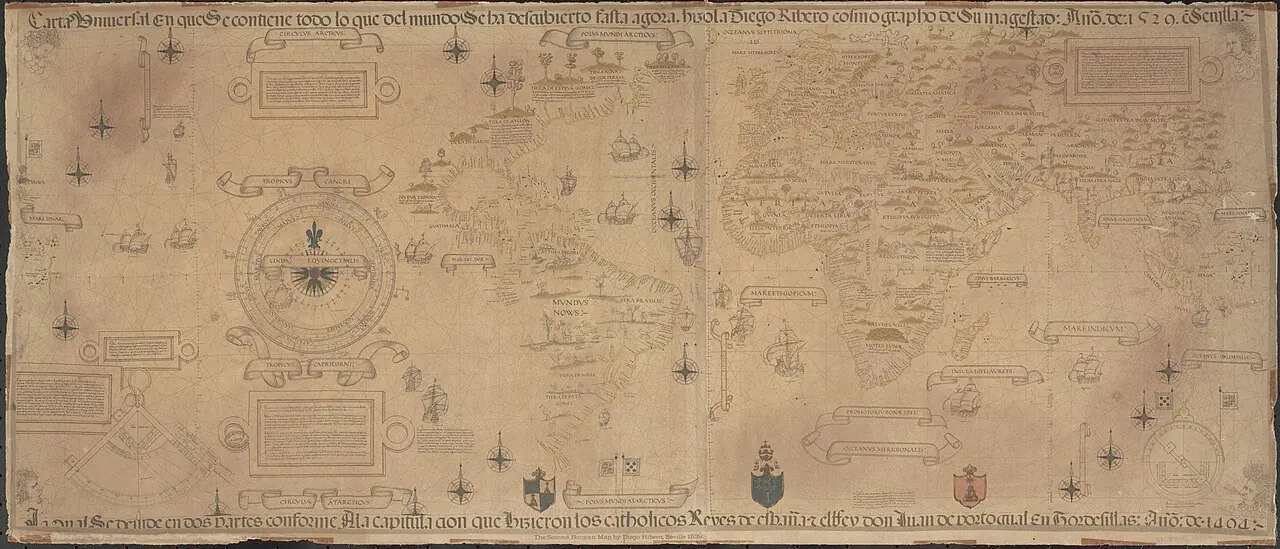
Universal chart of Diego Ribero: reproduction · Model of 1529; 2019 reproduction based on a 19th-century facsimile. The linked copy is a 2019 reproduction, not the original of 1529. The chain of reproduction is expressly kept.
Art and memory
- Portrait of Sebastián Caboto · 1824
Sources and references
- [B211] Objectives of Cabot's expedition. Municipality of Puerto Gaboto. n.d.; edition date not established. Original record
- [B201] Sebastián Caboto. José María González Ochoa. Undated electronic edition; consulted on 2 November 2026. Original record
- Objectives of Cabot's expedition. Municipality of Puerto Gaboto. It records the departure from Sanlúcar on 3 April 1526 and the composition of the fleet; the Moluccas objective is to be separated from the actual voyage to the Plata.
General bibliography guides further reading; it is not a pinpoint reference for every claim. Page, chapter and archival references are identified at the relevant passages.
Send comments to the author
Found an error or have information to contribute? Write privately to the author.