

Casa de la Contratación of Seville
In this entry · 4 sections
20 January 1503 · Seville
It is 20 January 1503. For ten years traffic with the lands found by Columbus has been growing and becoming hard to control. Ships leave Seville and Cádiz, return laden with gold and news, and the Crown wants to know what comes in, what goes out and who sails.
The Catholic Monarchs therefore order the creation in Seville of an institution to organise maritime traffic with the Indies: goods, passengers, ships and the gold that came from America. The House of Trade is installed in the Royal Alcázar and is charged with recording voyages and collecting the Crown’s dues. [B299]
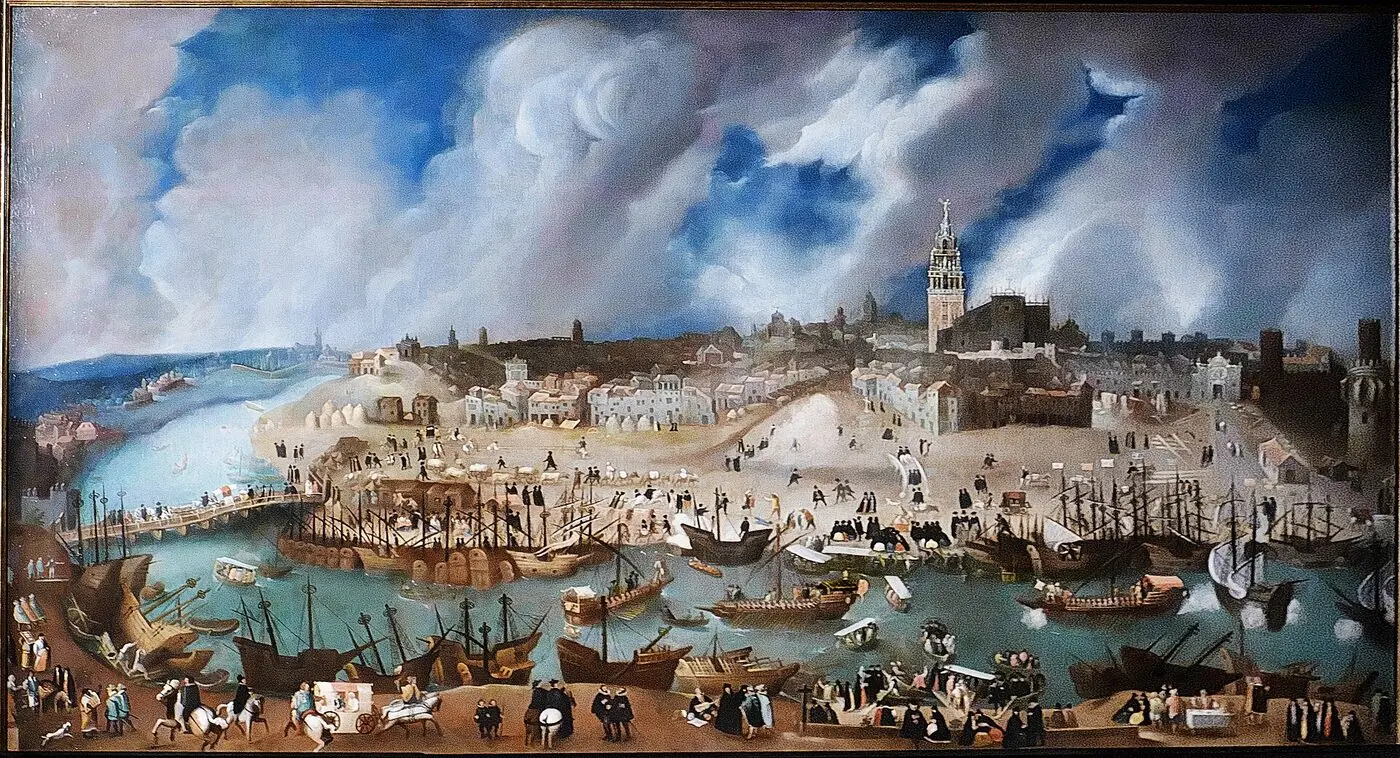
Seville, a river port some leagues from the sea, thus becomes the official gateway to the Indies. Nothing was supposed to leave or arrive without passing through its officials.
Over time the House became much more than a trade office. It became a key centre for the training and examination of pilots, the control of expeditions and the production of the Padrón Real, the official nautical chart on which the map of the New World was corrected with the information navigators brought back. [B299]
Cosmographers, pilots and cartographers worked together there, and that shared labour produced many of the charts used to sail the ocean throughout the sixteenth century.
Context
Founding of the Casa de Contratación of Seville
Creation of the Casa de la Contratación as the body for organizing, controlling and administering communication with the Indies. [B299]
The growth of the voyages required gathering supplies, registering people and goods and ordering commercial relations. The institution's competences developed gradually.
The Casa was established in Seville and approved ordinances and procedures.
In time it took part in registers, in the training and examination of pilots and in the production of nautical knowledge.
Why it matters
It centralised Atlantic navigation in Seville and turned the information of the pilots into state cartography.
Where it appears
Expeditions and episodes
Also mentioned in
Art
Sources for this milestone
- [B299] Casa de la Contratación de las Indias: institutional authority record
- [B308] Establishment and ordinances of the Casa de la Contratación
- [B207] Archivo General de Indias: folleto de fondos e instituciones
- [B272] Holdings of the General Archive of the Indies
- [B296] Register book of passengers to the Indies
Send comments to the author
Found an error or have information to contribute? Write privately to the author.