

Juan Ponce de León reaches Florida
In this entry · 3 sections
2 April 1513 · East coast of Florida
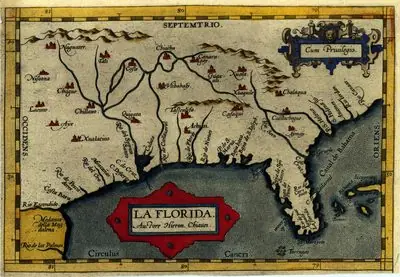
It is 2 April 1513, in the middle of the “Pascua Florida”, the Easter season following Easter Sunday. Three ships that left Puerto Rico have been sailing north-west for weeks among shoals and islands under Juan Ponce de León, a former companion of Columbus and governor of Puerto Rico.
Ponce de León had obtained a licence from the Crown to discover and settle an island, Bimini, of which he had heard. What they sight, however, is a long, low coast covered in vegetation. They call it Florida, for the Easter season in which they saw it and for the look of the land. They think it is an island; they do not yet know it is a peninsula.
For weeks they explore the coast, descend to the south, skirt the Keys and reach the Gulf of Mexico, looking for water and harbours. The native people of the region, who had already known visitors from other seas, receive the Spaniards with hostility.
On the same voyage his pilot, Antón de Alaminos, noticed the strength of the Gulf Stream, which years later would shape the return route of the fleets to Spain.
The exact location of the 1513 landing is not known with certainty. The name Florida expresses the interpretation of the navigators; the societies of the territory had histories and names that predated their arrival. [B382]
Ponce de León would return to the region in 1521 with settlers, and there he was wounded in a clash with the local people; he died shortly afterwards in Cuba.
Why it matters
It is one of the first documented European explorations of the mainland of the present-day United States.
Send comments to the author
Found an error or have information to contribute? Write privately to the author.