

Nicolás de Ovando
In this entry · 16 sections
- A knight of Alcántara
- The fleet of 1502
- The government of Hispaniola
- Return and death
- Documentary comparison of a specific episode
- Instructions and Indigenous labour
- Offices
- Disputed dates and open questions
- Participation
- Related protagonists
- Maps
- Related milestones
- Mentioned in other entries
- Sources
- Linked sources
- Sources of the related expeditions
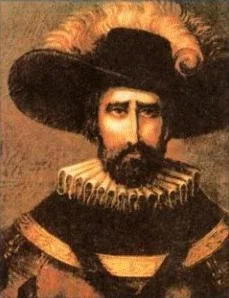
Unidentified artist · Circa 1500 (record dating).
A member of the Order of Alcántara, initially associated with the commandery of Lares and later its senior commandership. His American career developed within that framework of royal service. [B153] [B153]
Birth: Brozas or Cáceres, 1451 or 1460 [B153]. Death: Seville, 29 May 1511 [B153].
A knight of Alcántara
Luis Arranz’s biography identifies him as the second son of Captain Diego de Cáceres Ovando and Isabel Flores. It explains the children’s use of the surname Ovando and places his entry into the Order of Alcántara early in life. He was commander of Lares and, from 1503, grand commander. [B153]
The fleet of 1502
Arranz dates departure from Cádiz to 13 February 1502 and arrival at Santo Domingo to 15 April. He gives thirty ships and no fewer than 2,500 people, including Las Casas, Pizarro and Ponce de León. This figure from the study is not turned into an exact list distinguishing settlers from crew. [B153] [B153]
The government of Hispaniola
His government was marked by the wars of Higüey and Jaragua. Arranz’s biography describes the burning of the house where Jaragua’s caciques had assembled and Anacaona’s subsequent execution. It also explains the authorisation of forced labour in 1503, the repartimientos and Indigenous population decline. No single census for 1492 or 1507 is established from that passage, which does not provide both counts. The study’s urban-history paragraph dates Santo Domingo’s rebuilding on the opposite bank of the Ozama to 1502. [B153]
Las Casas, who knew him, portrayed him as prudent, just and an enemy of greed, “worthy of governing many people, but not Indians”, because his government did them “inestimable harm”. [B16]
Return and death
According to Arranz, Diego Columbus took the staffs of justice on 10 July 1509, the day after reaching Santo Domingo. Ovando returned to Castile and died in Seville on 29 May 1511. The study describes his body’s transfer to San Benito de Alcántara. [B153]
Documentary comparison of a specific episode
Las Casas, book II, chapters III–IV, describes Ovando’s appointment and the departure of his fleet in February 1502. His criticism of colonial government should be read in the context of the author’s position. [B16]
Instructions and Indigenous labour
Mena identifies the appointment of 3 September 1501 as AGI, Indiferente, 418, L.1, f. 25, and distinguishes public from secret instructions. Her study examines the contradiction between declaring Indigenous people free and compelling them to work, and analyses the decree of 20 December 1503 strengthening labour allotments. These archival references come from the study; the originals have not been examined. [B166]
Offices
- Commander of Lares and commander major of the Order of Alcántara [B153]
- Governor of Hispaniola (1502–1509) [B153]
Chronology
A life, step by step. Follow the dates and open each milestone or image to explore its sources.
- 1478 / 1503
Circa 1500 (record dating) About this image
Portrait of Nicolás de Ovando · Circa 1500 (record dating). Context portrait; it does not depict this event. Representation attributed to this person in the provenance record. It is not treated as evidence of physical appearance or as a record of their expeditions. The date of the work is distinguished from its digitisation date.Commander of Lares, then chief commander of Alcántara according to Varela. [B153]
- 13 February 1502
Departure from Cádiz with thirty ships and at least 2,500 people according to Varela. [B153]
Explore this year - 15 April 1502
He reaches Hispaniola. [B153]
Explore this year - 1502
He moves and rebuilds Santo Domingo on the west bank of the Ozama. [B153]
Explore this year - 1503–1504
He orders the cacica Anacaona hanged. [B153]
Explore this year - 1508
Andrés de Morales commissioned to explore and map Hispaniola. [B153]
Explore this year - 10 July 1509
Diego Columbus relieves him. [B153]
Explore this year - 29 May 1511
He dies in Seville. [B153]
Explore this year
Disputed dates and open questions
- Varela reports competing birthplaces and dates. [B153]
- The study describes forced labour, slave-taking and the killing of Anacaona; its use of “pacification” is historiographical language. [B153]
Participation
- Establishment and founding of Santo Domingo (1496–1498) (1496): Governor during the move of 1502
- Colonizing Fleet of Nicolás de Ovando (1502): Participant in or head of the enterprise; see the clarifications and sources in the record
Related protagonists
- Antonio de Torres
- Bartolomé Colón
- Alonso de Espinosa (pasajero de 1502)
- Juan de Espinosa (armada de Ovando)
Maps
Related milestones
Mentioned in other entries
- Diego Velázquez de Cuéllar
- Francisco Pizarro
- Juan Ponce de León
- 1496: The Admiral's return
- 1501: Shipowners and knights
Una mención permite investigar una relación; no implica participación en la expedición ni acredita por sí sola el pasaje citado.
Sources
- Historia de las Indias, volumen 3 de 5, Bartolomé de las Casas
- Nicolás de Ovando, Luis Arranz Márquez
- History of the Indies, Bartolomé de las Casas · Miguel de Cervantes Virtual Library
- Colonial City of Santo Domingo, UNESCO World Heritage Centre
- Historia de las Indias. Tomo I, Bartolomé de las Casas
- La gente de Ovando en los protocolos hispalenses, Anuario de Estudios Americanos, CSIC, 63/1 (2006)
- Fernando el Católico y las Indias. Santo Domingo: la nueva frontera atlántica de los reinos castellanos, Carmen Mena García
Linked sources
- [B2] History of the Indies. Volume I
- [B16] Historia de las Indias, volumen 3 de 5
- [B153] Nicolás de Ovando
- [B166] Ferdinand the Catholic and the Indies: Santo Domingo as a new Atlantic frontier
- [B168] Ovando's people in the Seville protocols
- [B208] Colonial City of Santo Domingo
- [B285] History of the Indies, annotated edition
Send comments to the author
Found an error or have information to contribute? Write privately to the author.