

Colonizing Fleet of Nicolás de Ovando
In this entry · 18 sections
- Context
- Stages
- Development
- Route data
- Outcome
- Limits of the evidence
- Expedition facts
- Organisation
- Objectives
- Recorded vessels
- People and societies
- Related people
- Related cartography
- Art and memory
- Other expeditions with shared protagonists
- Mentioned in other entries
- Sources and references
- Further reading and comparison
Expedition · 1502. Nicolás de Ovando; Antonio de Torres, captain general of the fleet.
Las Casas, who states that he travelled in the fleet, dates departure from Sanlúcar to 13 February 1502. He counts 32 ships and 2,500 men and names Antonio de Torres captain general. This is not an agreed total: in note 33 Mena reports Mira’s revision to about 1,200 people. Varela gives thirty ships and departure from Cádiz. [B16]¶ [B166] [B153]
The chronicler describes a storm before the Canaries, loss of a ship and later division of the fleet. He dates Ovando’s arrival at Santo Domingo to 15 April and places Torres’s arrival with the other group twelve or fifteen days later. Ovando’s government and naval command are thus distinguished. [B16]
Instructions for protection must be compared with subsequent campaigns and forced labour. Mena studies this tension and the provision of 20 December 1503; Varela describes the burning of chiefs and hanging of Anacaona. That violence is not described as mere pacification. [B166] [B153]
Context
The replacement of the previous government was accompanied by an organized emigration of settlers and resources. [B153]
Stages
Development
The fleet carried settlers, animals and supplies. The occupation of the island spread through towns, exploitation of Indigenous labor and violent campaigns. [B166] [B153]
The colonial project combined officials, settlers and compulsory Indigenous labour. Mena examines the tension between protective instructions and labour provisions culminating in the decree of 20 December 1503. [B166]
Route data
- 32 ships according to Juan Gil; older sources sometimes speak of 30.
- About 2,500 people; Juan Gil identified 298 names in Seville protocols.
- Columbus, arriving on his fourth voyage, warned of the hurricane; Ovando did not let him enter the port.
Outcome
The colonial system of Hispaniola was reinforced, with grave consequences for Taíno societies. [B153]
Limits of the evidence
Ovando’s governorship is distinguished from naval command; this entry does not present a complete roster of all passengers. [B16]
Expedition facts
| Date | 1502 |
|---|---|
| Leader | Nicolás de Ovando; Antonio de Torres, captain general of the fleet |
| Departure | Sanlúcar de Barrameda |
| Destination | Antilles |
| Period | February 13, 1502 |
Organisation
Departure from Sanlúcar de Barrameda. Destination of the enterprise: Hispaniola. [B16]
Objectives
Recorded vessels
- Las Casas gives thirty-two vessels and about 2,500 people; Mena’s study, p. 109 and note 33, records an estimate near 1,200. The counts and their sources are distinguished. [B16]¶ [B166]
People and societies
- Nicolás de Ovando: Participant in or head of the enterprise; see the clarifications and sources in the record [B16]
- Antonio de Torres: Participant in or head of the enterprise; see the clarifications and sources in the record [B16]
Related people
- Alonso de Espinosa (pasajero de 1502)
- Antonio de Torres
- Juan de Espinosa (armada de Ovando)
- Nicolás de Ovando
Related cartography
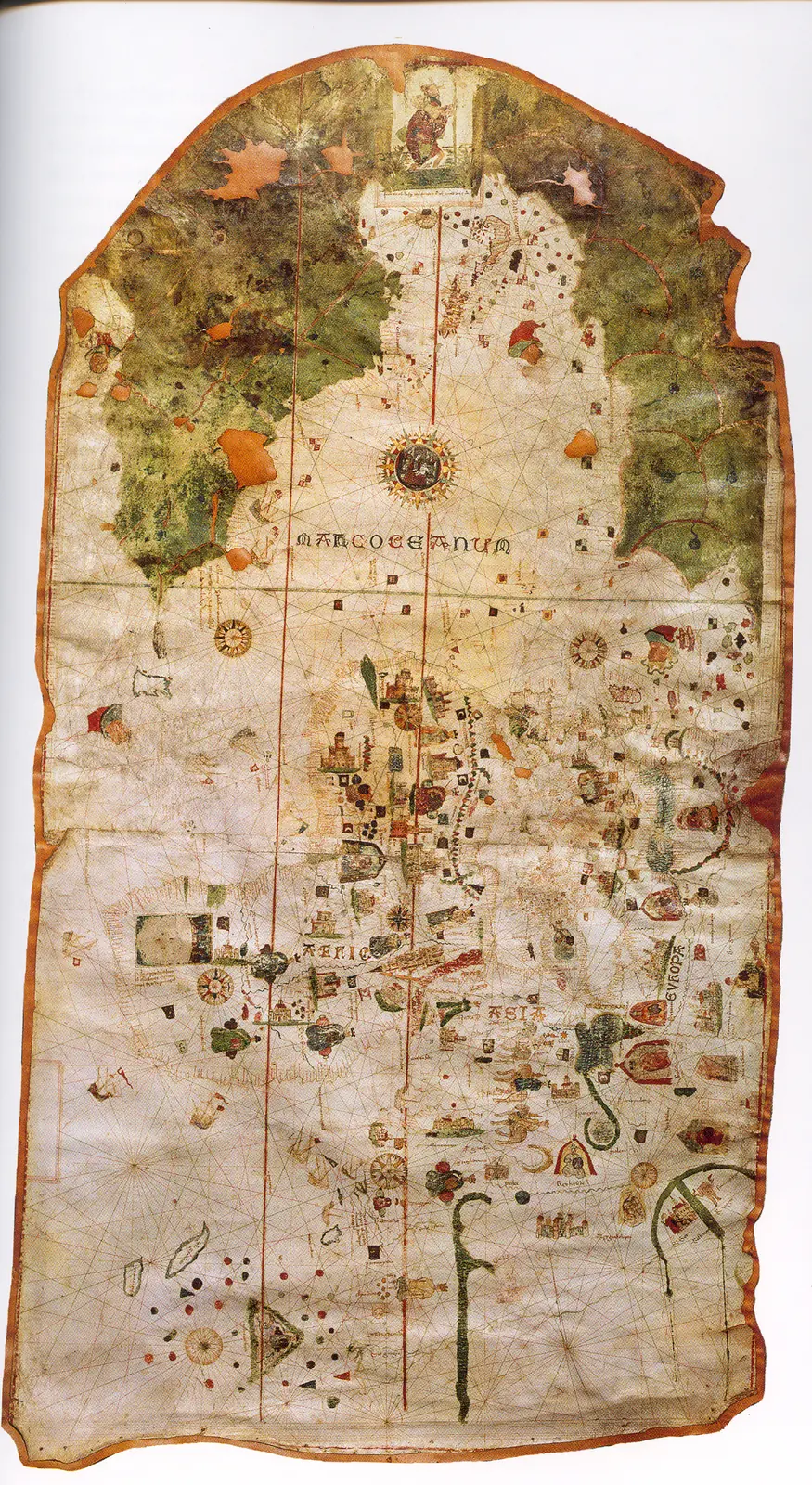
Juan de la Cosa's chart · 1500. It is not a map of the route of Columbus's first voyage. The image reproduces the chart preserved in the Naval Museum, MNM 257.
Art and memory
- Portrait of Nicolás de Ovando · Circa 1500 (record dating)
Other expeditions with shared protagonists
Mentioned in other entries
Una mención permite investigar una relación; no implica participación en la expedición ni acredita por sí sola el pasaje citado.
Sources and references
- [B168] Ovando's people in the Seville protocols. Anuario de Estudios Americanos, CSIC, 63/1 (2006). n.d.; edition date not established. Original record
- [B16] Historia de las Indias, volumen 3 de 5. Bartolomé de las Casas. Work written between 1527 and 1561; edition of 1875. Original record
- [B166] Ferdinand the Catholic and the Indies: Santo Domingo as a new Atlantic frontier. Carmen Mena García. 2017. Original record
- [B153] Nicolás de Ovando. Luis Arranz Márquez. Undated electronic edition; consulted on 2 November 2026. Original record
- Ovando's people in the Seville protocols. Anuario de Estudios Americanos, CSIC, 63/1 (2006). Documentary study of the passengers of the colonizing fleet of 1502; the surviving protocols do not represent a complete roll.
General bibliography guides further reading; it is not a pinpoint reference for every claim. Page, chapter and archival references are identified at the relevant passages.
Send comments to the author
Found an error or have information to contribute? Write privately to the author.