

Menéndez de Avilés founds San Agustín
In this entry · 5 sections
8 September 1565 · Florida
It is 8 September 1565, on the Atlantic coast of Florida. A Crown fleet anchored off a Timucua town lands soldiers, settlers and supplies. In command is Pedro Menéndez de Avilés, an Asturian mariner appointed adelantado of Florida by Philip II with the mission of securing the territory. [B375]
The Crown had an urgent reason. The French, Huguenots, had settled the year before in a fort called Caroline, beside the St Johns River, and from there could threaten the route of the fleets returning to Spain through the Bahama channel. [B160]
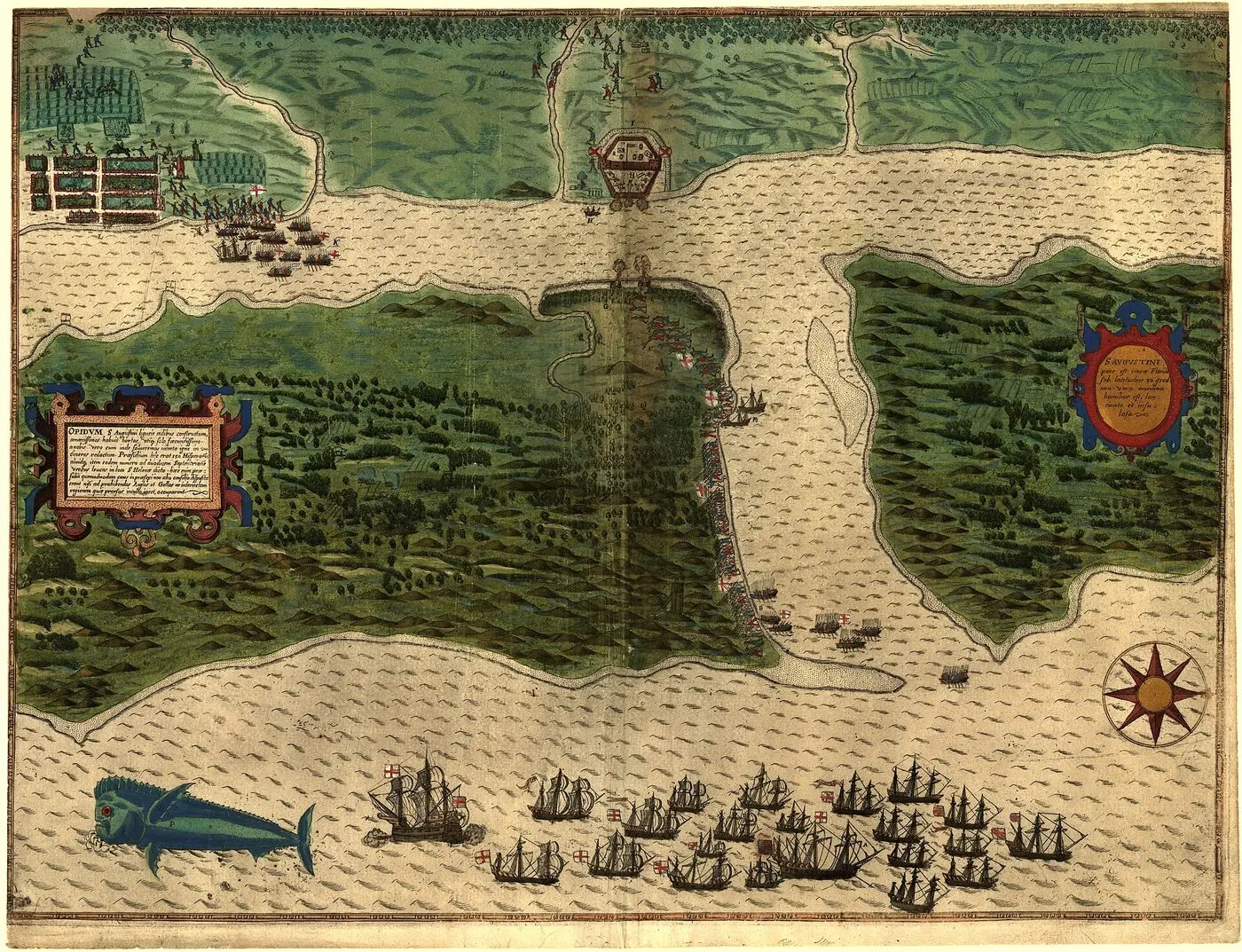
The Asturian mariner Pedro Menéndez de Avilés establishes San Agustín, shortly before attacking the French fort of Caroline.
With that settlement, Menéndez de Avilés gains a base for his operations. A few days later he will march against Caroline and take it, and on the southern coast he will order many shipwrecked Frenchmen executed.
The city survived fires and attacks, such as that of Francis Drake in 1586, which gave rise to the oldest surviving map of the town.
The settlement is established in Timucua territory and is tied to French competition in Florida. Its permanence should be distinguished from earlier Spanish attempts that failed, such as San Miguel de Gualdape. [B248]
St Augustine is today the oldest continuously inhabited European-founded city in what is now the United States.
Context
Pedro Menéndez de Avilés's Expedition to Florida
Expedition of conquest and settlement tied to the establishment of San Agustín. [B216]¶ [B210]
The Crown sought to sustain a presence in Florida and expel the French from the region. [B210]
The fleet crossed the Atlantic and reached Florida in August. In September San Agustín was established and the offensive against the French positions developed. [B210]
Why it matters
It is the oldest continuously inhabited European settlement in the present-day United States and protected the fleet route.
Where it appears
Expeditions and episodes
Also mentioned in
Maps
Art
Linked people
Sources for this milestone
- [B160] Florida: Fort Caroline National Memorial
- [B248] San Miguel de Gualdape
- [B375] The First Thanksgiving: the founding of St Augustine in 1565
- [B210] Pedro Menéndez de Avilés y Alonso de la Campa, Diccionario Biográfico Español
- [B216] Memoir of the happy result and prosperous voyage of the fleet commanded by the illustrious Captain-General Pedro Menendez de Aviles
- [B225] St. Augustine, Florida’s Colonial Capital
Send comments to the author
Found an error or have information to contribute? Write privately to the author.