

Urdaneta completes the tornaviaje
In this entry · 5 sections
8 October 1565 · Acapulco
It is 8 October 1565. In the port of Acapulco, on the Pacific coast of New Spain, a ship worn down by more than four months at sea drops anchor: she left Cebu on 1 June, sixteen of the two hundred and ten on board died and, on arrival, only ten to eighteen men were able to work. [B284]¶ She is the San Pedro, and she comes from the Philippines. What had seemed impossible has just been achieved: returning from Asia to America across the Pacific Ocean.
The problem was an old one. Since Magellan the Spaniards had known how to reach the western islands by sailing west, with the trade winds behind them. But returning was another matter: the same winds blew against them, and several expeditions, such as those of Loaísa and Saavedra, had failed to get back.
The ship San Pedro, under Felipe de Salcedo and with Andrés de Urdaneta as navigation guide, reaches Acapulco from the Philippines.
Urdaneta, an Augustinian friar, had survived the Loaísa expedition decades before. Now, with Legazpi’s fleet newly arrived at Cebu, he proposes a solution: go north, to high latitudes, and find westerly winds there that will carry the ship to America.
The route climbed a little over 39° N to take advantage of the winds and currents of the North Pacific. [B284]
The return of the San Pedro provides a usable route linking the Philippines with New Spain. The return of Alonso de Arellano the same year should also be remembered (his patache San Lucas had separated from the fleet weeks after leaving Navidad) [B284]¶, and the individual voyages distinguished from the later consolidation of a regular route. [B100]
That route would allow, for more than two centuries, the Manila galleon to link Asia and America in regular trade across the Pacific.
Context
Urdaneta's discovery of the return route (tornaviaje)
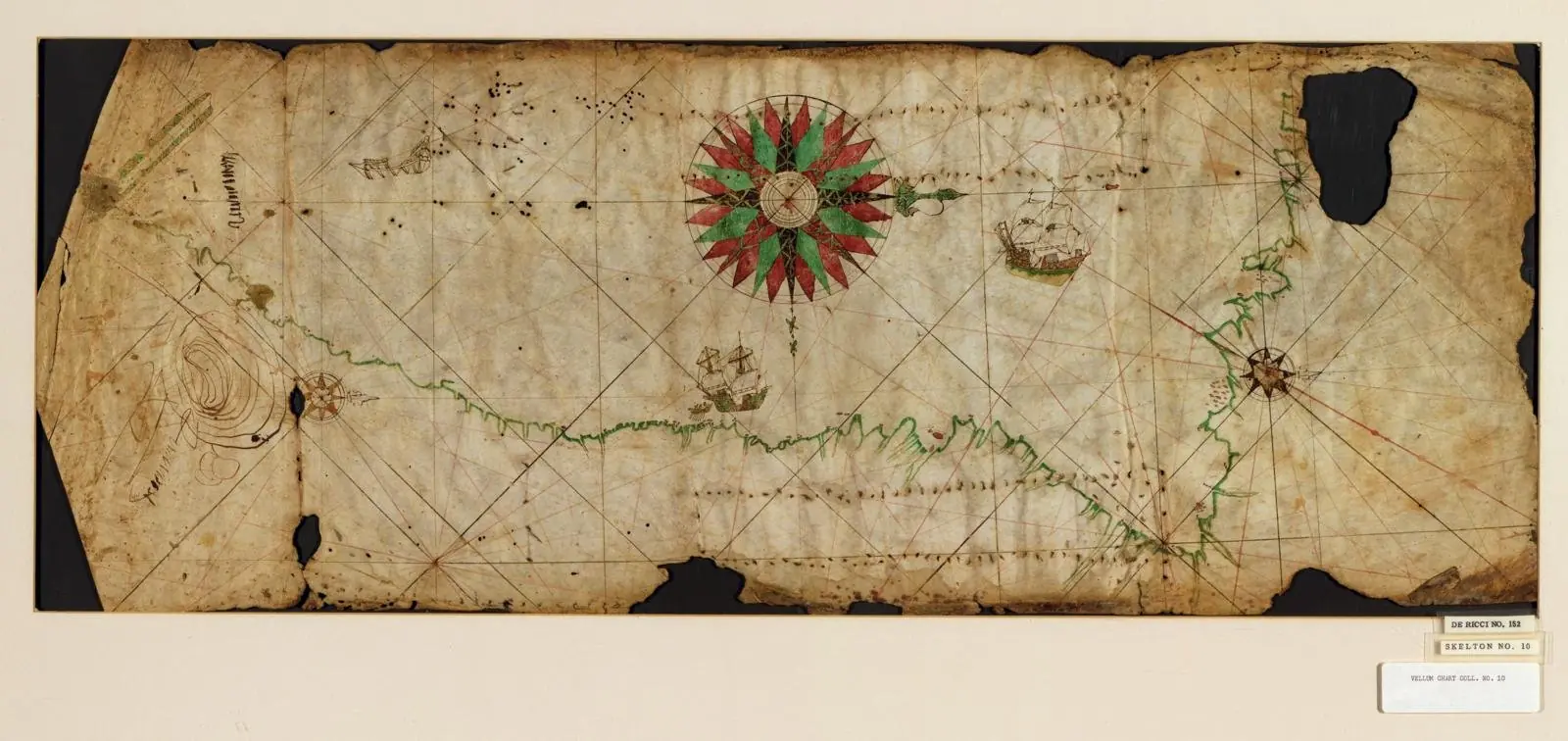
Return of the San Pedro from Cebu to New Spain: Urdaneta designed a route across the North Pacific that allowed a maritime return link to be consolidated. [B27]¶ [B105]
The main difficulty was not just crossing to Asia but returning east. Winds and currents forced a search for latitudes different from the outbound route. The campaign built on accumulated experience and earlier attempts, including Saavedra's. [B105] [B105]
Conquest of the Philippines
Expedition of Miguel López de Legazpi from New Spain and colonial establishment at Cebu in 1565, with a decisive nautical contribution by Andrés de Urdaneta. [B27]¶ [B52]
The earlier attempts had shown both the interest in Asia and the difficulties of returning. Legazpi's enterprise aimed to maintain a stable presence and find a trans-Pacific connection, in territories with powers and trade networks of their own. [B105] [B100]
The description of PATRONATO,23,R.16 brings together texts by several pilots. Its publication notes refer to the 1886 edition: Rodrigo’s outward account occupies pp. 217–351 and his return log pp. 427–456; Esteban Rodríguez’s outward account appears on pp. 373–426. These references locate distinct testimonies for comparison, not works by a single author. [B126]
Why it matters
It made possible the regular trade of the Manila galleon between Asia and America for 250 years.
Where it appears
Expeditions and episodes
Other milestones of those expeditions
Maps
- Universale descrittione di tutta la terra conosciuta fin qui
- Asiae nova descriptio
- Maris Pacifici
- Indiae Orientalis, insularumque adiacentium typus
Art
Linked people
- Andrés de Urdaneta
- Miguel López de Legazpi
- Felipe de Salcedo
- Guido de Lavezaris
- Rodrigo de Espinosa (piloto)
Sources for this milestone
- [B100] The expedition of Legazpi and Urdaneta: the tornaviaje
- [B3] The Spanish Lake
- [B4] España y el Pacífico: un breve repaso a las expediciones españolas de los siglos XVI al XVIII
- [B26] The Discovery and Conquest of the Molucco and Philippine Islands
- [B27] History of the Philippine Islands
- [B32] Caminos sobre la mar. Las expediciones a las islas de la especiería después de Magallanes, 1525–1564
- [B51] La gran isla de Nueva Guinea: descubrimiento y navegación por los españoles (1528–1607)
- [B52] Miguel López de Legazpi
- [B54] Events in the Philippine Islands
- [B58] Legazpi and Urdaneta: organization of the expedition and tornaviaje
- [B83] Christian Doctrine in Spanish and Tagalog
- [B101] Andrés de Urdaneta virtual voyage: sailing journals of 1565
- [B105] Andrés de Urdaneta y Ceraín, Diccionario Biográfico Español
- [B108] El galeón del diablo: la desventura del San Jerónimo en aguas del océano Pacífico (1566)
- [B115] Guido de Lavezaris
- [B124] Virtual navigation of Alonso de Arellano: the 1564–1565 fleet
- [B126] Sailing accounts and reports by the pilots of Legazpi’s fleet
- [B128] Collection of unpublished overseas documents, second series, volume II: The Philippine Islands, I
- [B165] The Philippines: Legazpi (1564–65)
- [B172] Andrés Urdaneta y el Tornaviaje
Send comments to the author
Found an error or have information to contribute? Write privately to the author.