

Fleet of Flores de Valdés and Sarmiento to the Strait
In this entry · 16 sections
Expedition · 1581. Diego Flores de Valdés and Pedro Sarmiento de Gamboa.
Cervera distinguishes the September 1581 departure from Sanlúcar, the storm and reorganisation in Cádiz before departing again in December. [B199]
The fleet suffered shipwrecks, repairs and dispersal. The groups that reached the strait founded Nombre de Jesús and Rey Don Felipe in 1584. [B199] [B199]
The settlements could not be sustained; hunger and lack of relief caused a human catastrophe. [B199] [B265]
Context
Drake's passage into the Pacific drove a defense project with settlers and fortifications in the strait. [B199]
Stages
- 1581; successive departures, Sanlúcar de Barrameda and Cádiz: The two departure attempts of 1581 are distinguished from later sailings and reinforcements from Brazil. [B199]
Development
The fleet suffered shipwrecks, repairs and dispersal. The groups that reached the strait founded Nombre de Jesús and Rey Don Felipe in 1584. [B265] [B190]¶ [B190]¶ [B199] [B199]
Route data
- Large fleet of 23 ships on departure, with losses and separations; the number varies by departure.
- Its aim was to close the strait to English corsairs after Drake's passage.
- In 1587 Thomas Cavendish found Rey Don Felipe in ruins and called it Port Famine.
Outcome
The settlements could not be sustained; hunger and lack of relief caused a human catastrophe. [B223]¶ [B223]¶ [B199] [B265]
Limits of the evidence
The first attempt of September and the departure after repairs are combined, without duplicating the fleet. It is not to be confused with Sarmiento's voyage begun in Peru in 1579. [B199]
Expedition facts
| Date | 1581 |
|---|---|
| Leader | Diego Flores de Valdés and Pedro Sarmiento de Gamboa |
| Departure | Sanlúcar de Barrameda and Cádiz |
| Destination | Patagonia |
| Period | 1581; successive departures |
Organisation
Cervera distinguishes the September 1581 departure from Sanlúcar, the storm and reorganisation in Cádiz before departing again in December. [B199]
Objectives
Recorded vessels
- Cervera describes twenty-three vessels in the first attempt, storm losses and a reorganised fleet; these are not counts of an unchanging complement. [B199]
People and societies
- Diego Flores de Valdés: Captain general of the fleet [B199]
- Pedro Sarmiento de Gamboa: Governor and captain general of the settlements in the strait [B199]
Related people
Related cartography
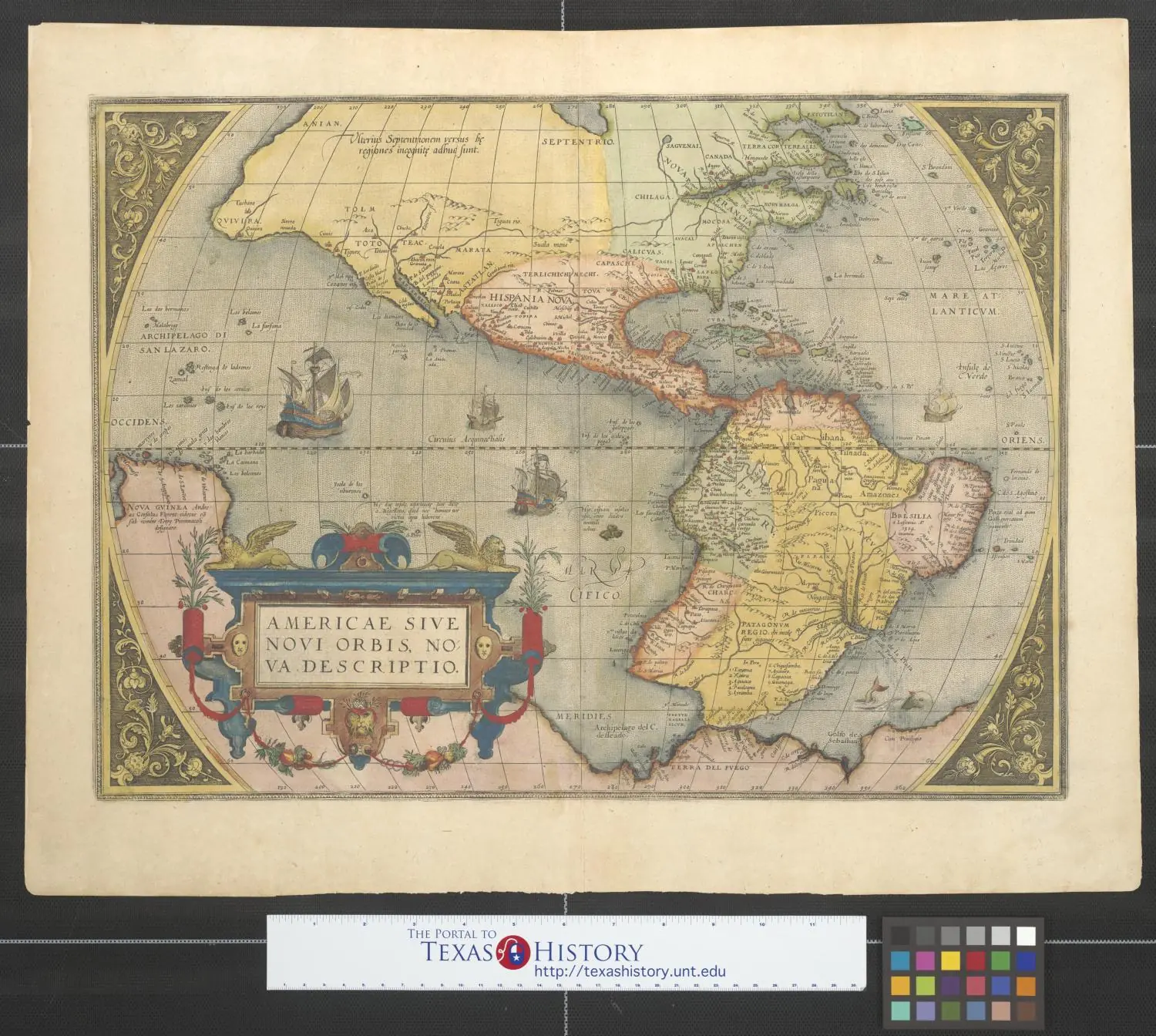
Americae sive novi orbis, nova descriptio · 1570. The depictions of the far south and the interior territories contain incomplete information and hypotheses of the period.
Other expeditions with shared protagonists
Sources and references
- [B190] Narratives of the Voyages of Pedro Sarmiento de Gamboa to the Straits of Magellan. Pedro Sarmiento de Gamboa; Tomé Hernández; translation and edition by Clements R. Markham. Hakluyt Society edition (1895). Original record
- [B223] Voyage to the Strait of Magellan in 1579 and 1580, and account of the subsequent settlement expedition. Pedro Sarmiento de Gamboa; Tomé Hernández (deposition in the appendix). Madrid, Imprenta Real de la Gazeta, 1768. Original record
- [B192] Account of corsairs and Sarmiento’s voyage, with a royal order of 1595: Basterrechea’s manuscript copy. José de Basterrechea (copyist); transmitted account and royal order. Copy of 22 August 1796; royal order dated 17 December 1595. Original record
- [B265] Strait of Magellan: three discoveries. Museo Chileno de Arte Precolombino; autores de capítulos identificados en la obra. n.d.; edition date not established. Original record
- [B199] Pedro Sarmiento de Gamboa. Marcelino González Fernández. Undated electronic edition; consulted on 2 November 2026. Original record
- Strait of Magellan: three discoveries. Chilean Museum of Pre-Columbian Art. Historical and archaeological reconstruction of the settlement project of 1581–1584. The fleet's successive departures and repairs are not independent expeditions.
General bibliography guides further reading; it is not a pinpoint reference for every claim. Page, chapter and archival references are identified at the relevant passages.
Examine and compare documents
- From account to manuscript copy: defending the Pacific — What can a manuscript copy demonstrate, and what does it preserve from its sources? ·
- Sarmiento and Hernández: reading the Spanish text — What does the 1768 Spanish printing add to comparison with Markham? ·
- Sarmiento and Hernández: two accounts of the settlements — How can the governor’s account be compared with a survivor’s? ·
Documentary supplements with their own review scope; they do not certify a complete collation of this entry.
Send comments to the author
Found an error or have information to contribute? Write privately to the author.