

Juan de Grijalva reaches San Juan de Ulúa
In this entry · 5 sections
24 June 1518 · Off present-day Veracruz
It is 24 June 1518, the feast of St John. Four ships from Cuba, under Juan de Grijalva, skirt the coast of the Gulf of Mexico westward. They were sent by Diego Velázquez, governor of Cuba, to trade for gold and to explore the lands that another expedition, that of Francisco Hernández de Córdoba, had sighted the previous year.
For weeks they have seen large towns, stone temples and cities that remind them, they say, of those of Spain. At Champotón and elsewhere they have had to fight. On reaching the mouth of a river, opposite an islet, they drop anchor and go ashore.
Grijalva’s expedition explores the coast of the Gulf of Mexico and reaches the islet opposite present-day Veracruz, which he named San Juan for the feast of the day. [B10]
There, envoys of Moctezuma, come from the interior, appear with gifts and a wish to exchange goods. The Spaniards offer beads and trifles and receive gold and rich ornaments in return: it was the first direct news of a great power in the interior. [B10]
Grijalva returns to Cuba with news, objects and gold. Velázquez, displeased that no colony had been founded, soon commissions a new expedition, this time under Hernán Cortés, which would leave in 1519.
Context
Grijalva's Expedition: Contact with the Aztec Empire
Juan de Grijalva's fleet covered Yucatán, Tabasco and the Gulf of Mexico coast, obtaining information on regional powers and Mesoamerican trade networks. [B10]¶ [B106]
After Córdoba's campaign, Diego Velázquez organized a broader survey from Cuba. Its commercial and exploratory aim is not automatically identified with the conquest program that Cortés would adopt. [B22]
Why it matters
His explorations prepared the next expeditions, including that of Hernán Cortés, who landed in the same place in 1519.
Where it appears
Expeditions and episodes
Other milestones of those expeditions
Maps
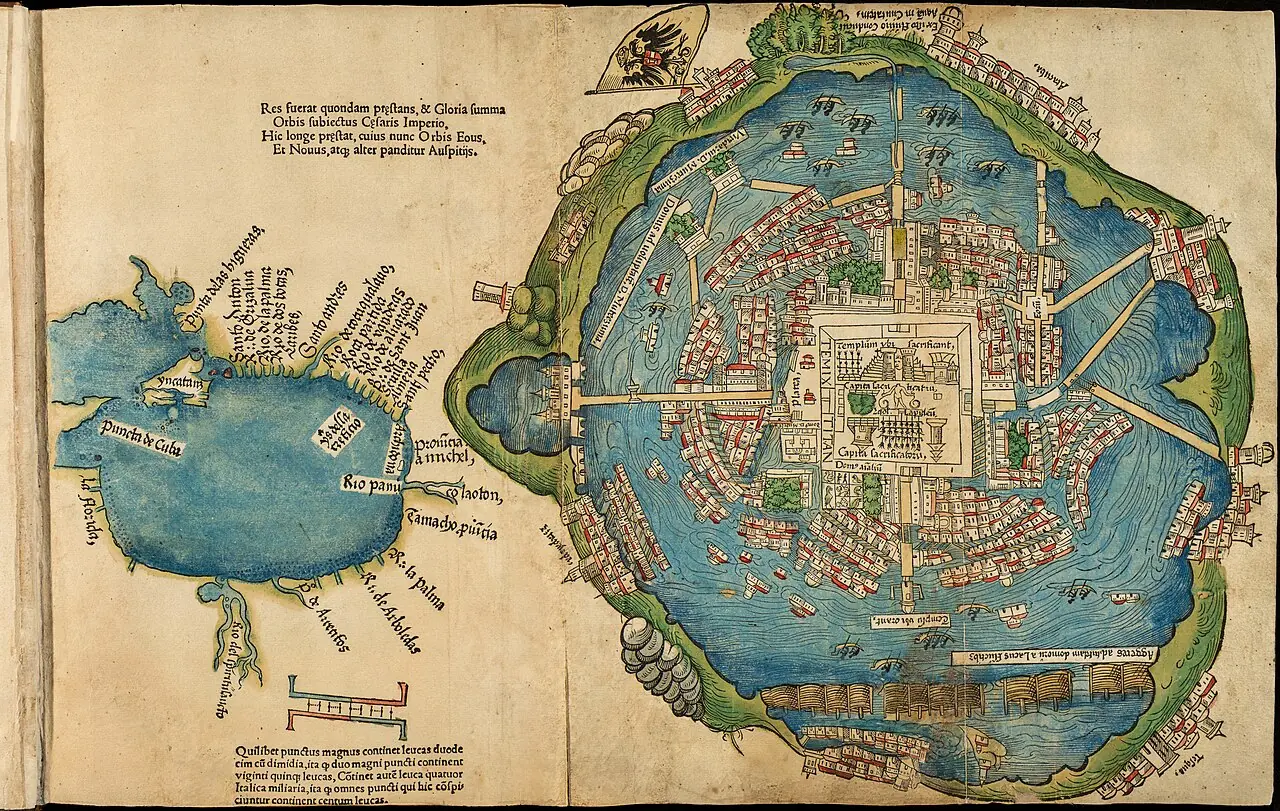
- Tenochtitlan and the Gulf of Mexico
- Americae sive quartae orbis partis nova et exactissima descriptio
- Americae sive novi orbis, nova descriptio
Art
- Portrait of Juan de Grijalva
- Portrait of Pedro de Alvarado
- Plan of Tenochtitlan from the second Letter of Relation
Linked people
- Juan de Grijalva
- Antón de Alaminos
- Francisco de Montejo
- Juan Díaz
- Pedro de Alvarado
- Francisco Hernández de Córdoba
- Hernán Cortés
Sources for this milestone
- [B10] True History of the Conquest of New Spain
- [B19] The Yucatán–Honduras coast, scene of contact 500 years ago (Francisco Hernández de Córdoba, 1517)
- [B22] Memoirs of the Conquistador Bernal Diaz del Castillo, volumen 1
- [B56] Préstamos latentes entre el maya y el español en cuatro textos del siglo XVI en Yucatán
- [B103] General History of the Indies
- [B106] Juan de Grijalba
Send comments to the author
Found an error or have information to contribute? Write privately to the author.