

Cristóbal Colón
In this entry · 19 sections
- Genoese origins
- Portugal and the project of sailing west
- Six years of negotiation in Castile
- The voyage of 1492
- Second and third voyages: colony and crisis
- The High Voyage and the last years
- Assessment
- Offices
- Disputed dates and open questions
- Participation
- Related protagonists
- Maps
- Art
- Related milestones
- Mentioned in other entries
- Sources
- Examine and compare documents
- Linked sources
- Sources of the related expeditions
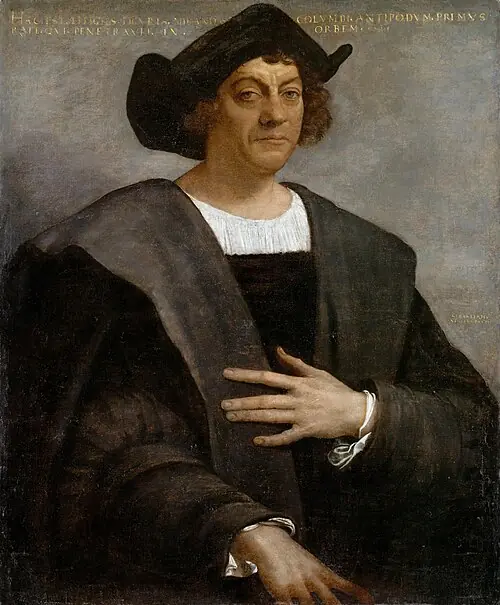
Sebastiano del Piombo · Before 1519.
He led the voyage that departed the Iberian Peninsula in August 1492 and reached Guanahani in October. The voyage began a sustained connection between the two sides of the Atlantic. [B8] [B8]
Birth: Genoa, 1451 according to Pérez de Tudela [B8]. Death: Valladolid, 20 May 1506 according to Pérez de Tudela [B8].
Genoese origins
The testimonies assembled by Juan Pérez de Tudela, including the entail attributed to Columbus, place his origin in Genoa. The RAH biography identifies him as the son of Domenico Colombo and Susanna Fontanarossa and the brother of Bartolomé and Diego. Pérez de Tudela defends this origin against other geographical proposals. Religious ancestry is a separate question from birthplace. [B8]
His son Hernando, author of a devout biography, wished to give him studies at Pavia of which there is no record. What is certain is that he sailed from youth along the Ligurian coast attending to the family business and that, probably between 1470 and 1472, he took part in corsair actions in the service of the House of Anjou. [B8]
Portugal and the project of sailing west
In 1477 he was in Portugal; in 1478 he was buying sugar in Madeira for the Genoese house of Centurione. Around 1479 he married Felipa Moniz Perestrello, daughter of the donatary captain of Porto Santo, where his son Diego was born between 1480 and 1482. He sailed to Guinea and was at São Jorge da Mina. [B8]
His project radically underestimated the size of the globe, drawing on readings of Esdras, Pierre d’Ailly and Pius II. He presented it to John II of Portugal in 1484. According to Pérez de Tudela, the king did not reject it immediately: he referred it to a panel of experts and prolonged negotiations without granting the support Columbus sought. [B8]
Six years of negotiation in Castile
In 1485 he settled in Castile with his son Diego. From 20 January 1486, when he was received by the Monarchs at Alcalá de Henares, he was their protégé and received aid for his upkeep. At Córdoba he met Beatriz Enríquez de Arana, whom he did not marry and who was the mother of his son Hernando. [B8]
Pérez de Tudela interprets the war of Granada and the risk of conflict with Portugal as reasons for the delay. In 1491, Friar Juan Pérez’s intervention from La Rábida with the queen reopened the matter. The Capitulations of Santa Fe were signed on 17 April 1492: admiral, viceroy and governor of the lands he discovered, with a tenth of the profits; the offices were made hereditary on 30 April. [B8]
The voyage of 1492
The town of Palos was condemned to provide two caravels: the Pinta, of Martín Alonso Pinzón, and the Niña, of Vicente Yáñez Pinzón; the flagship nao came from the Cantabrian coast. They sailed on 3 August 1492, repaired the Pinta's rudder at La Gomera and followed the parallel of the Canaries. [B8]
In the first days of October the crews' unrest forced a change of course following the flight of birds, and the Pinzóns and Juan de la Cosa agreed to continue a few more days. On 12 October they reached Guanahaní, in the Bahamas. They explored Cuba and, from 6 December, Hispaniola. The nao ran aground on 25 December and with her remains the fort of Navidad was built, under Diego de Arana. The return began on 16 January 1493; Columbus entered Lisbon on 4 March and Palos on the 15th. [B8]
In the Santángel letter, Columbus presents possession of the islands as a success. That perspective must be distinguished from Indigenous experiences and present-day interpretation of occupation. The linked reading is Major’s English translation of 1870, not the original Spanish wording. [B9]
Second and third voyages: colony and crisis
On 25 September 1493 he sailed from Cádiz [B9]¶ with five naos and twelve caravels, colonists, livestock and seeds: the aim was now to settle and keep discovering. He explored the Lesser Antilles, Puerto Rico, Jamaica and the south coast of Cuba, but found the fort of Navidad razed. La Isabela and the colony suffered hunger, disease and desertions, and Columbus sent Indigenous people to the Peninsula to sell them as slaves. [B8]
Complaints led the Crown to send Juan Aguado in 1495. Columbus returned in 1496 and obtained confirmation of his privileges. On the third voyage, from Sanlúcar on 30 May 1498 [B9]¶, he reached Trinidad and the Gulf of Paria and understood that he had found an immense land, which he identified with the antechamber of the Earthly Paradise. [B9]¶ [B8]
On Hispaniola, Francisco Roldán had rebelled against the adelantado Bartholomew Columbus. The Monarchs sent Francisco de Bobadilla as investigating judge, who in 1500 put the three brothers in chains and sent them to Castile. Freed, Columbus did not recover the government of the Indies. [B8]
The High Voyage and the last years
He left Cádiz on 11 May 1502 with four ships, his brother Bartholomew and his thirteen-year-old son Hernando. He was refused refuge in Santo Domingo in the face of a hurricane that sank some twenty-five ships of the returning fleet. He explored the coasts of Honduras, Nicaragua, Costa Rica and Panama seeking a strait that did not exist. [B8]
His last two ships were stranded in Jamaica in June 1503, where he spent a year amid mutinies and hardship until his rescue. He reached Sanlúcar on 7 November 1504, shortly before Queen Isabella's death. Gravely ill, he claimed his rights; he was not poor. He made his will on 19 May 1506 and died the next day in Valladolid. [B8]
Assessment
Assessment of his government must consider the enslavement and shipment of Indigenous people to the Peninsula, Roldán’s rebellion and Bobadilla’s intervention. Pérez de Tudela discusses these episodes in the cited paragraphs. His judgements on the colonial system and Columbus’s actions are historiographical interpretations, not the words of the Indigenous communities affected. [B8]
His remains passed from Valladolid to the Carthusian monastery of Seville in 1509 and, later, probably to Santo Domingo; today the cathedrals of Seville and Santo Domingo both claim them. [B8]
Offices
- Admiral of the Ocean Sea (Capitulations of Santa Fe, 1492) [B8]
- Viceroy and governor of the lands he might discover (1492–1500) [B8] [B8]
Family tree
Lines connect only recorded parents. Probable relationships have dashed borders. Expand each person to consult details and sources.
Scroll horizontally to explore the tree.
- DCDomenico ColomboFather
Details and sources
Ligurian family involved in textile production, according to Pérez de Tudela
Documented · Pérez de Tudela [B8]
SFSusanna FontanarossaMotherDetails and sources
Ligurian family involved in textile production, according to Pérez de Tudela
Documented · Pérez de Tudela [B8]
- Cristóbal ColónAdmiral of the Ocean Sea
Details and sources
Genoa, 1451; Valladolid, 1506, according to the study
Documented · Pérez de Tudela [B8] [B8]
Parents: Domenico Colombo · Susanna Fontanarossa
Portrait credits and provenanceFMFelipa Moniz PerestrelloWife, c. 1479Details and sources
Daughter of the donatary captain of Porto Santo
Marriage
Documented · Pérez de Tudela [B8]
BEBeatriz Enríquez de AranaPartner in Córdoba; they did not marryDetails and sources
Young orphan of humble condition
Union without marriage
Documented · Pérez de Tudela [B8]
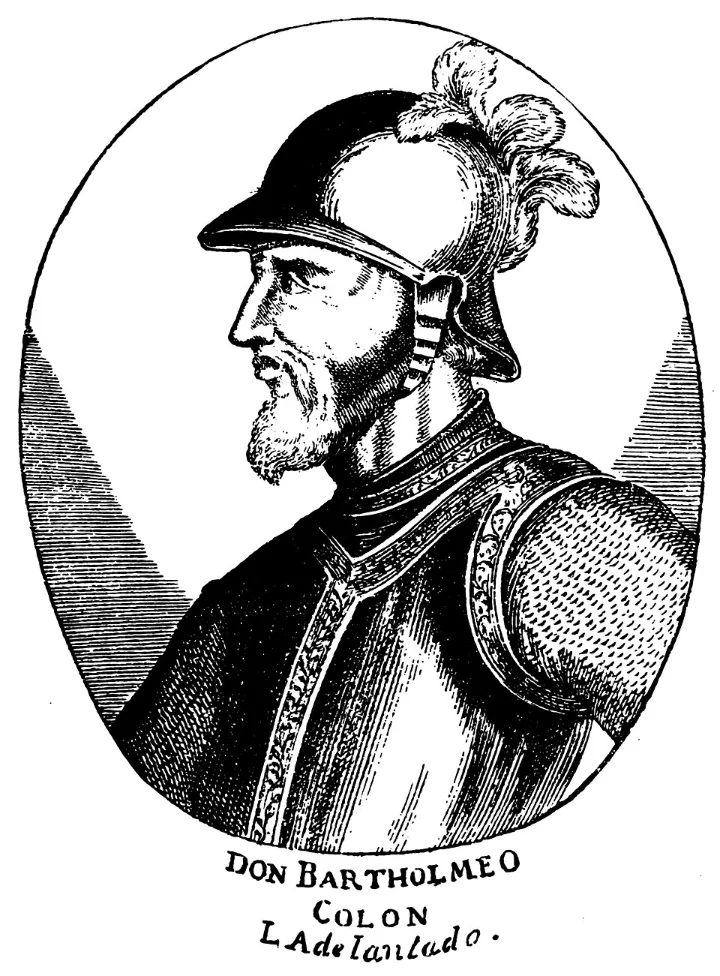 Bartolomé ColónBrother
Details and sources
Named Bartolomeo in Pérez de Tudela’s genealogical passage
Documented · RAH [B8]
Parents: Domenico Colombo · Susanna Fontanarossa
Portrait credits and provenanceGCGiacomo Colombo (Diego Colón, hermano)BrotherDetails and sources
Distinguished from the admiral’s son, also named Diego Colón
Documented · RAH [B8]
Parents: Domenico Colombo · Susanna Fontanarossa
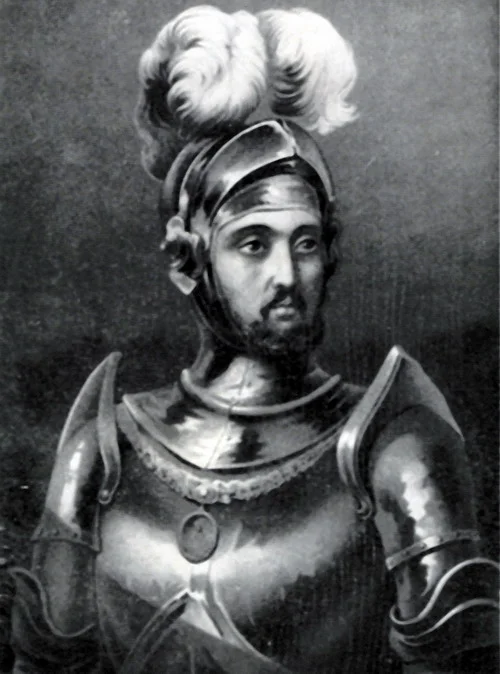 Diego ColónSon of Felipa Moniz; 2nd Admiral
Details and sources
Born at Porto Santo between 1480 and 1482; heir to his father’s titles
Documented · Pérez de Tudela [B8]
Parents: Cristóbal Colón · Felipa Moniz Perestrello
Portrait credits and provenance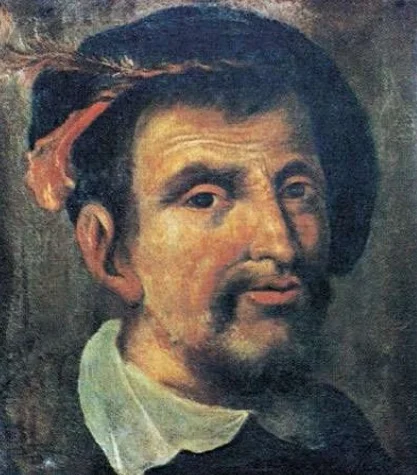 Hernando ColónSon of Beatriz Enríquez
Details and sources
Geographer, bibliophile and biographer of his father; on the fourth voyage
Documented · Pérez de Tudela [B8] [B8]
Parents: Cristóbal Colón · Beatriz Enríquez de Arana
Portrait credits and provenance
Chronology
A life, step by step. Follow the dates and open each milestone or image to explore its sources.
- 1451
Before 1519 About this image
Portrait of a Man, thought to be Christopher Columbus · Before 1519. Context portrait; it does not depict this event. The identification of the sitter with Columbus is traditional and disputed. It is shown as a portrait attributed to his figure, not as a scene of this voyage.Born in Genoa, according to the most widespread opinion. [B8]
- 1477
Documented in Portugal. [B8]
- c. 1479
Marries Felipa Moniz Perestrello. [B8]
- 1484
Offers his project to John II of Portugal. [B8]
- 20 Jan. 1486
Received by the Catholic Monarchs at Alcalá de Henares. [B8]
- 17 Apr. 1492
- 3 Aug. 1492
Sails from Palos. [B8]
Explore this year - 12 Oct. 1492
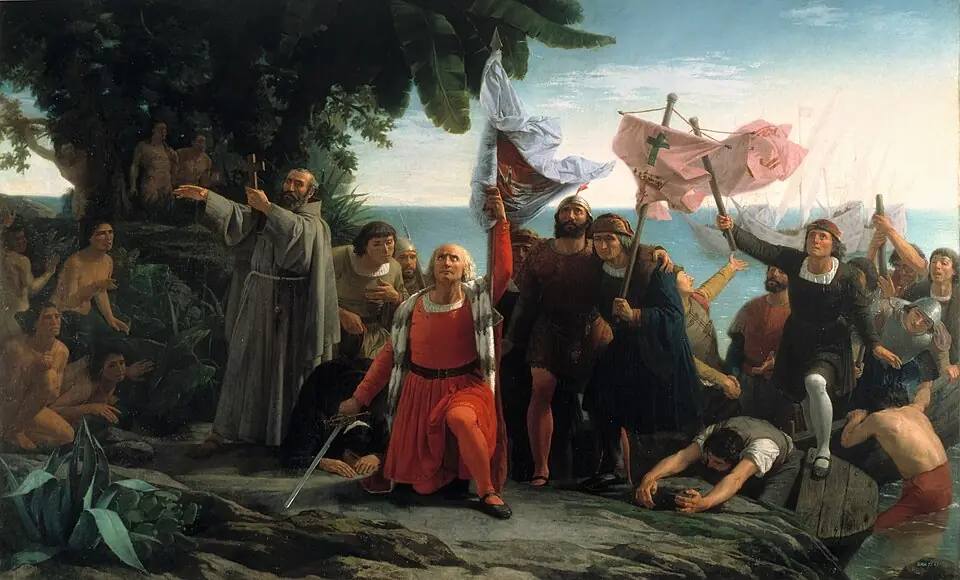
Image linked to the milestone About this image
First landing of Christopher Columbus in America, Dióscoro Puebla, 1862.Arrival at Guanahaní. [B8]
View the milestone: Columbus reaches America - 25 Sept. 1493
Second voyage from Cádiz. [B8]
View the milestone: Departure of Columbus’s second voyage - 30 May 1498
Third voyage from Sanlúcar; reaches Paria. [B8]
Explore this year - 1500
Bobadilla sends him to Castile in chains. [B8]
Explore this year - 11 May 1502
Fourth voyage from Cádiz. [B8]
Explore this year - 7 Nov. 1504
Final return to Sanlúcar. [B8]
Explore this year - 20 May 1506
Dies in Valladolid. [B8]
Explore this year
Disputed dates and open questions
- The Genoese origin is attributed to Pérez de Tudela’s reading of contemporary evidence; it is distinguished from proposals about religious ancestry. [B8]
- The author’s explanation of the project and negotiations remains a historiographical interpretation. [B8]
- The movements and later claims concerning the remains are those reported by the study. [B8]
Participation
- First Voyage of Columbus: Discovery of America (1492): Admiral and head of the expedition
- Second Voyage of Columbus: Colonization of the Antilles (1493): Head of the fleet and governor
- Exploration of southern Cuba and Jamaica (1494): Head of the surveys of the second voyage
- Expeditions on Hispaniola and the repartimiento system (1495): Responsible for colonial government
- Return and outcome of Columbus's second voyage (1496): He returned to present results and defend his grants
- Third Voyage of Columbus: Discovery of the Mainland (1498): Head of the voyage and governor
- Columbus's fall as governor (1500): Removed from effective government
- Fourth Voyage of Christopher Columbus (1502): Voyage leader
- Columbus's return and the death of Isabella of Castile (1504): Returned from his fourth campaign
Related protagonists
Maps
- Juan de la Cosa's chart
- Cantino planisphere
- Caverio planisphere
- Universalior cogniti orbis tabula
- Universalis cosmographia
- Fragment of the Piri Reis world map
- Carta marina navigatoria
- Americae sive quartae orbis partis nova et exactissima descriptio
Show all links (10)
Art
Related milestones
- Columbus reaches Cuba
- Columbus reaches Hispaniola
- Loss of the Santa María and La Navidad fort
- Return of Columbus’s first voyage
- Landings on Guadeloupe
- Sighting of Dominica
- Encounter at Salt River Bay
- Columbus’s expedition reaches Puerto Rico
Show all links (15)
Mentioned in other entries
- Reinforcement of Bartholomew Columbus on Hispaniola
- Extract of the Capitulations of Santa Fe
- Columbus's instruction to Pedro Margarit
- The Letters of Amerigo Vespucci, and Other Documents Illustrative of His Career
Una mención permite investigar una relación; no implica participación en la expedición ni acredita por sí sola el pasaje citado.
Sources
- Cristóbal Colón, Diccionario Biográfico Español, Juan Pérez de Tudela y Bueso · Real Academia de la Historia
- History of the Indies, annotated edition, Bartolomé de las Casas · Biblioteca Virtual Miguel de Cervantes
- Voyages of Christopher Columbus (summary of the diary), Bartolomé de las Casas · Biblioteca Nacional de España
- Select Letters of Christopher Columbus, Cristóbal Colón; edición de R. H. Major
- Capitulaciones de Santa Fe: copia registral, Corona y Cristóbal Colón; registro del secretario Juan de Coloma
- Historia de las Indias, volumen 2 de 5, Bartolomé de las Casas
Examine and compare documents
- The Caribbean: tribute, captivity and resistance — Which voices does a conquest account preserve, and which are mediated? ·
- Columbus’s four voyages: different documents — Did Columbus write every account of the four voyages? ·
Documentary supplements with their own review scope; they do not certify a complete collation of this entry.
Linked sources
- [B8] Cristóbal Colón, Diccionario Biográfico Español
- [B9] Select Letters of Christopher Columbus
- [B24] Historia de las Indias, volumen 2 de 5
- [B96] Capitulations of Santa Fe: registry copy
- [B285] History of the Indies, annotated edition
- [B309] Voyages of Christopher Columbus: Las Casas's summary of the logbook
Sources of the related expeditions
- [B1] General and Natural History of the Indies: second part, first volume
- [B2] History of the Indies. Volume I
- [B5] De Orbe Novo, volumen 1
- [B11] Cronología General Iberoamericana: siglo XVI
- [B12] Historia del almirante don Cristóbal Colón
- [B14] Colección de los viages y descubrimientos, tomo II: Documentos de Colón y de las primeras poblaciones
- [B15] La Era de la Exploración: navegantes y conquistadores del siglo XVI
- [B16] Historia de las Indias, volumen 3 de 5
Show all links (26)
- [B18] Grants and confirmations of encomiendas: documentary guide
- [B19] The Yucatán–Honduras coast, scene of contact 500 years ago (Francisco Hernández de Córdoba, 1517)
- [B29] Historia general y natural de las Indias, islas y tierrafirme del mar océano (edición de la Real Academia de la Historia)
- [B36] Juan de la Cosa, Diccionario Biográfico Español
- [B37] Reivindicación burgalesa de Alonso de Ojeda, famoso conquistador y colonizador del Nuevo Mundo
- [B43] Vicente Yáñez Pinzón, Diccionario Biográfico Español
- [B65] Bartolomé Colón
- [B67] Historia de las Indias, volumen 1 de 5
- [B75] Martín Alonso Pinzón
- [B82] Explorers and conquerors of the Indies: geographical accounts
- [B85] La reescritura del Diario de a bordo y la figura de Cristóbal Colón en The Accidental Indies de Robert Finley
- [B87] New documented list of Columbus’s crew in 1492: notes
- [B104] A General History and Collection of Voyages and Travels, vol. III
- [B134] Hernando Colón
- [B138] Requerimiento de Palacios Rubios
- [B140] The Columbian voyages: synthesis and documents
- [B162] Reyes Católicos
- [B249] Today in History: May 3
Send comments to the author
Found an error or have information to contribute? Write privately to the author.