

Andrés de Urdaneta
In this entry · 16 sections
- From Villafranca to the Moluccas
- Eight years of war and diplomacy
- The return through the Indian Ocean and life in New Spain
- Friar and cosmographer
- The tornaviaje, 1565
- Offices
- Disputed dates and open questions
- Participation
- Related protagonists
- Maps
- Related milestones
- Mentioned in other entries
- Sources
- Examine and compare documents
- Linked sources
- Sources of the related expeditions
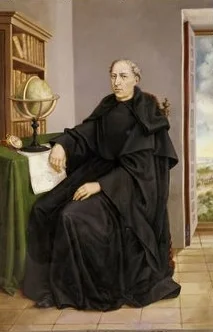
Unidentified artist · Date not established.
He participated in Loaísa’s fleet and remained in the Moluccas before becoming an Augustinian. In 1565 he directed the San Pedro’s navigation from the Philippines to New Spain, with Felipe de Salcedo in command. [B105] [B105]
Birth: Villafranca de Ordizia (Guipúzcoa), 1508 [B105]. Death: Mexico City, 3 June 1568 [B105].
From Villafranca to the Moluccas
The son of Juan Ochoa de Urdaneta and Gracia de Cerain, he received his early schooling in his home town. As a young man he joined García Jofre de Loaísa’s fleet, which left A Coruña on 24 July 1525 for the Spice Islands. The departure date is also recorded in Elcano’s biography. [B113] [B105]
The fleet suffered shipwrecks and the deaths of successive commanders, including Loaísa and Elcano. Urdaneta survived the crossing and remained in the Moluccas, where he performed military and diplomatic duties. The voyage’s events are distinguished from his later activities in the islands. [B113] [B105]
Eight years of war and diplomacy
In the Spice Islands he acted as ambassador to the chief of the island of Gilolo (Halmahera), from whom he obtained an alliance against the Portuguese, and soon became a group captain. According to the Royal Academy of History, he managed to bring Tidore and Gilolo under Castilian influence in exchange for leaving Ternate in Portuguese hands. In 1528 Álvaro de Saavedra's nao Florida arrived from New Spain, and its two attempts to cross the Pacific eastwards failed: of that experience Urdaneta would remember above all the hardships. [B105]
He spent several years in the Moluccas performing military duties and serving the Crown. The Zaragoza agreement of 1529 committed the emperor to ceding his rights over Maluco and refraining from navigation and trade there in return for 350,000 ducats, according to the PARES archival description. This summary does not replace examination of the treaty clauses. [B267] Urdaneta remained in Portuguese hands in the Far East until 1535, a time he used to travel around Malacca, observe customs and trading systems and learn vocabulary. [B105]
The return through the Indian Ocean and life in New Spain
He returned to the Iberian Peninsula by way of Cochin and the Cape of Good Hope: José Ramón de Miguel Bosch dates his arrival in Lisbon to 26 June 1536. He subsequently went to Castile, after about eleven years away, completing a journey around the world. [B172] No ordinal ranking among circumnavigations is assigned here. In Lisbon the geographical and ethnographic documentation he had gathered was taken from him; having escaped to Castile, he reported to the Council of the Indies, and passed on information from his Asian experience. [B105]
Pedro de Alvarado wanted to take him as pilot of the South Sea, but died in 1541. Urdaneta stayed in New Spain, took part in the pacification of Nueva Galicia and in 1543 was named by Viceroy Mendoza corregidor of the towns of Ávalos and inspector of Zapotlán and of the port of Navidad. In 1547 he was about to command the fleet against Gonzalo Pizarro, which proved unnecessary. [B105]
Friar and cosmographer
In 1553 he entered the Order of St Augustine and received priestly orders shortly afterwards. In 1559 Philip II authorised Viceroy Luis de Velasco to organise a fleet for the Philippines, on condition that it avoid the Moluccas, and asked that Urdaneta take part as cosmographer to find the return route. After his order's permission, the friar accepted. [B105]
He drew up the instructions and the outward sailing directions, which he would have preferred to direct towards New Guinea. Velasco's death and the weight of the Audiencia changed the destination: the fleet was oriented towards the Philippines and China, under the command of Miguel López de Legazpi. [B105]
The tornaviaje, 1565
Legazpi’s fleet left Navidad on 21 November 1564, as recorded in Leoncio Cabrero’s biography. It called at Guam and reached the Philippines. From Cebu, Legazpi sent the San Pedro back under Felipe de Salcedo’s command, with Urdaneta guiding navigation. [B52] [B105]
The San Pedro left Cebu on 1 June 1565 and, instead of seeking the east within the zone of the trade winds, climbed north-east to about 40° N, where the westerlies and the Japan current carried her towards California. From there she went down the coast and reached Acapulco on 8 October, her crew severely affected by illness. The log excerpt reproduced by Sierra de la Calle counts eighteen men able to work and sixteen dead when describing the final leg; these are figures from that testimony, not a balance for the whole fleet. [B100] [B105]
Arellano and pilot Lope Martín had reached New Spain earlier aboard San Lucas. The chronological priority of that return must be distinguished from the establishment of a documented route by San Pedro. [B27]¶ [B100]
The voyage helped establish the Manila galleon route, which linked Acapulco and the Philippines in both directions, outside Portuguese waters and from a port of New Spain. Urdaneta later returned to Spain to report and went back to Mexico, where he died on 3 June 1568. [B105]
Offices
- Soldier and group captain in the Moluccas (1526–1535) [B105]
- Corregidor of the towns of Ávalos and inspector of Zapotlán and the port of Navidad (from 1543) [B105]
- Augustinian friar (from 1553) [B105]
- Cosmographer and navigation guide of Legazpi's fleet (1564–1565) [B105]
Family tree
Lines connect only recorded parents. Probable relationships have dashed borders. Expand each person to consult details and sources.
Scroll horizontally to explore the tree.
- Andrés de UrdanetaNavigator and Augustinian friar
Details and sources
Villafranca, 1508 · Mexico, 1568
Documented · RAH [B105] [B105]
Parents: Juan Ochoa de Urdaneta · Gracia de Cerain
Portrait credits and provenance
Chronology
A life, step by step. Follow the dates and open each milestone or image to explore its sources.
- 1508
Date not established About this image
Portrait of Andrés de Urdaneta · Date not established. Context portrait; it does not depict this event. Representation attributed to this person in the provenance record. It is not treated as evidence of physical appearance or as a record of their expeditions. The date of the work is distinguished from its digitisation date. The date of the work has not been established; the file upload date is not used to date the portrait.Born in Villafranca de Ordizia (Guipúzcoa). [B105]
Explore this year - 24 July 1525
Leaves La Coruña with Loaísa's fleet. [B113]
View the milestone: Departure of Loaísa’s fleet - 1526
Reaches the Moluccas with the survivors of the fleet. [B105]
Explore this year - 1528
Saavedra's nao Florida arrives from New Spain; its attempts to return fail. [B105]
Explore this year - 1529
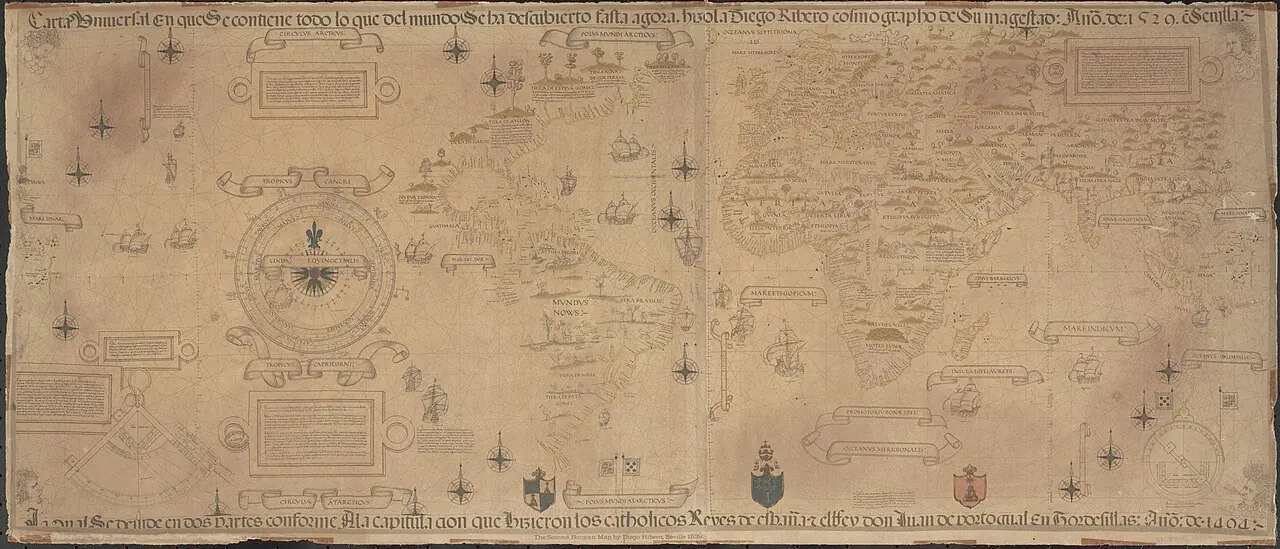
Image linked to the milestone About this image
Universal chart of Diego Ribero (1529), with the Moluccas on the Castilian side.The Treaty of Zaragoza gives the Moluccas to Portugal. [B105]
View the milestone: Treaty of Zaragoza - 26 June 1536
Reaches Lisbon, according to Miguel Bosch, and subsequently goes to Castile. [B172]
Explore this year - 1543
Viceroy Mendoza names him corregidor of the towns of Ávalos and inspector of the port of Navidad. [B105]
Explore this year - 1553
Enters the Order of St Augustine. [B105]
Explore this year - 1559
Philip II orders Urdaneta to take part in the Philippine fleet. [B105]
Explore this year - 21 November 1564
Leaves the port of Navidad with Legazpi's fleet. [B52]
Explore this year - 1 June 1565
The San Pedro leaves Cebu for New Spain. [B52]
Explore this year - 8 October 1565
Mid-16th century About this image
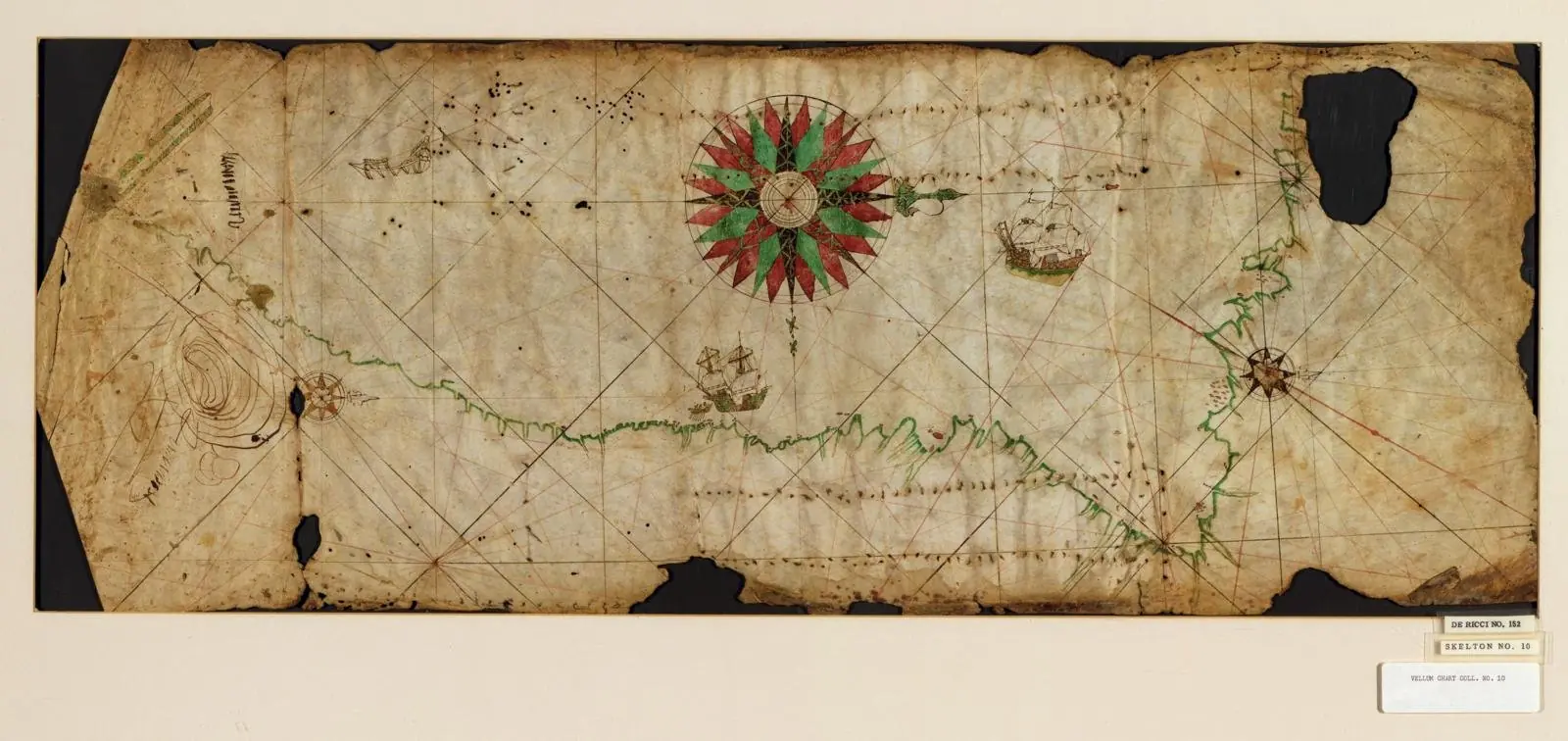
Portolan chart of the Pacific coast of America, with Acapulco.Reaches Acapulco: the tornaviaje is complete. [B105]
View the milestone: Urdaneta completes the tornaviaje - 3 June 1568
Dies in Mexico. [B105]
Explore this year
Disputed dates and open questions
- Salcedo commanded the San Pedro; Esteban Rodríguez was chief pilot. The RAH describes Urdaneta’s guidance and the pilot’s death. [B105]
- The RAH gives 42° N in one passage and approximately 40° in another. [B105] [B105]
- The study reports seizure of his papers at Lisbon in 1536; this is distinguished from proving their permanent loss. [B105]
Participation
- Loaísa's Expedition: Second Attempt on the Moluccas (1525): Participant who gained experience in the Pacific and the Moluccas
- Conquest of the Philippines (1565): Nautical adviser and head of the return project
- Urdaneta's discovery of the return route (tornaviaje) (1565): Main person responsible for the navigation of the return
Related protagonists
Maps
- Miller Atlas: world map
- Universal chart of Diego Ribero: reproduction
- Nautical planisphere of Lopo Homem
- Universale descrittione di tutta la terra conosciuta fin qui
- Nova et aucta orbis terrae descriptio
- Asiae nova descriptio
- Maris Pacifici
- Indiae Orientalis, insularumque adiacentium typus
Related milestones
Mentioned in other entries
- Gonzalo Gómez de Espinosa
- Los vascos y el Pacífico. Homenaje a Andrés de Urdaneta
- 1525: Loaísa, Santa Marta and Cuauhtémoc
Una mención permite investigar una relación; no implica participación en la expedición ni acredita por sí sola el pasaje citado.
Sources
- Tratado de Zaragoza, Carlos I y representantes de Portugal; descripción del Archivo General de Indias
- Andrés Urdaneta y el Tornaviaje, José Ramón de Miguel Bosch · Urdaneta 500
- Andrés de Urdaneta y Ceraín, Diccionario Biográfico Español, Mariano Cuesta Domingo · Real Academia de la Historia
- The expedition of Legazpi and Urdaneta: the tornaviaje, Instituto de Historia y Cultura Naval
- Colección de los viages y descubrimientos: Expediciones al Maluco. Viages de Loaisa y de Saavedra, Martín Fernández de Navarrete
- Caminos sobre la mar. Las expediciones a las islas de la especiería después de Magallanes, 1525–1564, Luis Alonso Álvarez
- History of the Philippine Islands, Antonio de Morga
- Juan Sebastián Elcano, Diccionario Biográfico Español, Manuel Lucena Salmoral · Real Academia de la Historia
- Miguel López de Legazpi, Leoncio Cabrero Fernández
Examine and compare documents
- New Guinea and the San Jerónimo: accounts and service records — What does each account contribute, and how does it differ from the study interpreting it? ·
- The eastward return: failed attempts and two returns in 1565 — Why are reaching Asia from America and finding a return route different problems? ·
- Legazpi, Urdaneta and Arellano: expedition and return voyages — Are the settlement at Cebu and the return voyage the same episode? ·
Documentary supplements with their own review scope; they do not certify a complete collation of this entry.
Linked sources
- [B27] History of the Philippine Islands
- [B32] Caminos sobre la mar. Las expediciones a las islas de la especiería después de Magallanes, 1525–1564
- [B52] Miguel López de Legazpi
- [B55] Colección de los viages y descubrimientos: Expediciones al Maluco. Viages de Loaisa y de Saavedra
- [B100] The expedition of Legazpi and Urdaneta: the tornaviaje
- [B105] Andrés de Urdaneta y Ceraín, Diccionario Biográfico Español
- [B113] Juan Sebastián Elcano, Diccionario Biográfico Español
- [B172] Andrés Urdaneta y el Tornaviaje
Show all links (9)
Sources of the related expeditions
- [B3] The Spanish Lake
- [B4] España y el Pacífico: un breve repaso a las expediciones españolas de los siglos XVI al XVIII
- [B6] Spanish discoveries in the South Sea
- [B7] Los hallazgos españoles en el Pacífico
- [B25] Portuguese Cartography in the Renaissance
- [B26] The Discovery and Conquest of the Molucco and Philippine Islands
- [B51] La gran isla de Nueva Guinea: descubrimiento y navegación por los españoles (1528–1607)
- [B54] Events in the Philippine Islands
Show all links (22)
- [B57] Álvaro Saavedra Cerón
- [B58] Legazpi and Urdaneta: organization of the expedition and tornaviaje
- [B62] Nautical treatises and documents of Magellan and Elcano
- [B83] Christian Doctrine in Spanish and Tagalog
- [B101] Andrés de Urdaneta virtual voyage: sailing journals of 1565
- [B108] El galeón del diablo: la desventura del San Jerónimo en aguas del océano Pacífico (1566)
- [B114] García Jofre de Loaysa
- [B115] Guido de Lavezaris
- [B119] García Jofre de Loaísa's expedition, 1525–1526
- [B124] Virtual navigation of Alonso de Arellano: the 1564–1565 fleet
- [B125] A legal and historical study of Loaísa’s expedition and the sale of rights over the Moluccas
- [B126] Sailing accounts and reports by the pilots of Legazpi’s fleet
- [B128] Collection of unpublished overseas documents, second series, volume II: The Philippine Islands, I
- [B165] The Philippines: Legazpi (1564–65)
Send comments to the author
Found an error or have information to contribute? Write privately to the author.